AI has moved the bottleneck from making to thinking

AI can turn an idea into a working prototype in minutes. That gives teams more room to explore what’s possible and find new ways to solve problems for people. It also makes the thinking behind those ideas more valuable: understanding what customers need and what makes a product feel like yours.
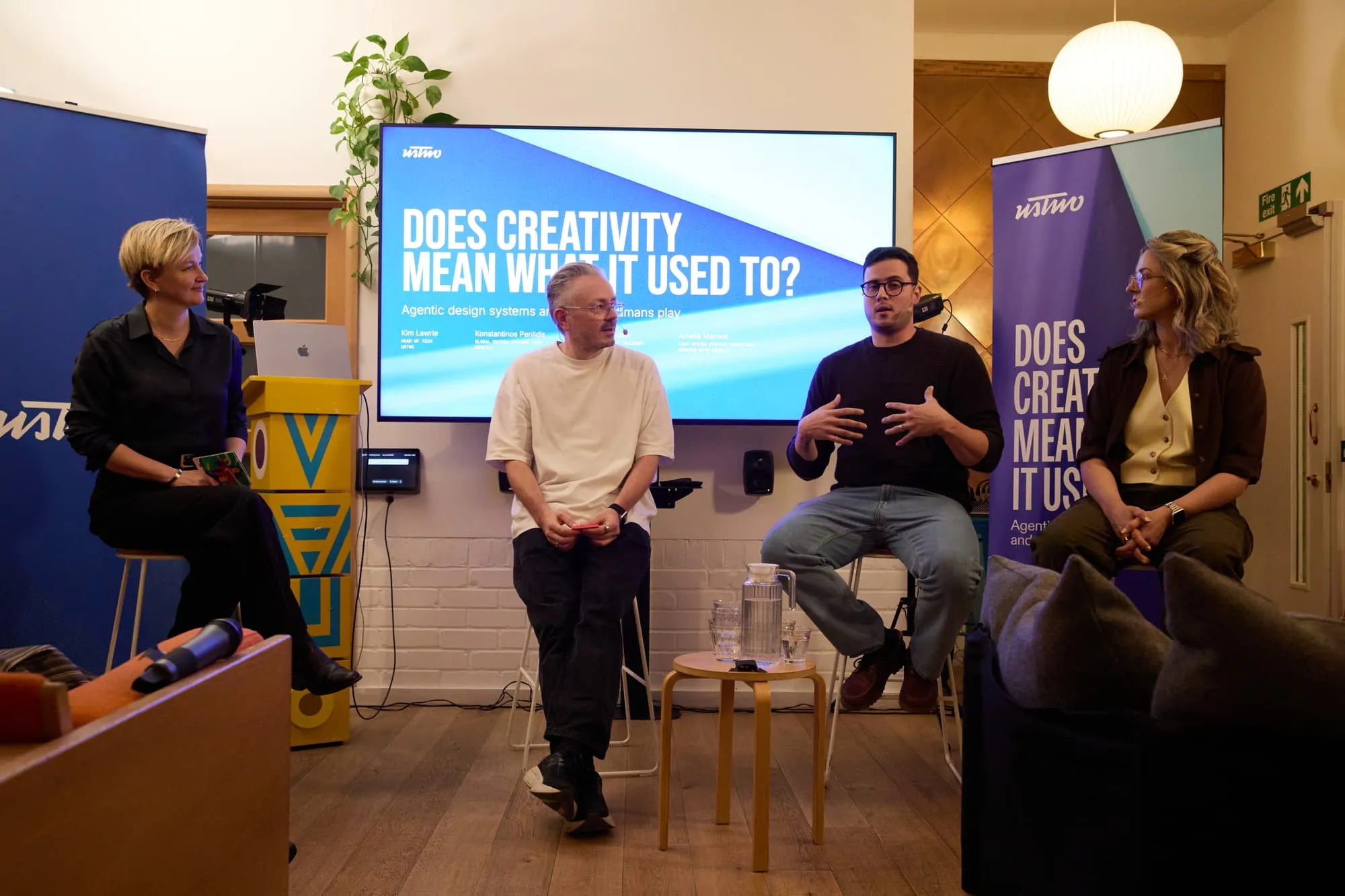
At our London and New York events, Does creativity mean what it used to? Agentic design systems and the role humans play, we brought together design and engineering leaders to share how they’re approaching this in their own teams. They spoke openly about the decisions they’re making and the challenges they’re still working through.
Know where you’re going
At Fin, principal product designer Domingo Widen remembers an all-hands meeting where the CEO announced a change of direction.
“Everybody needs to drop everything they’re doing, all roadmaps are cancelled. We want to work on AI,” he recalled. Fin went on to focus on AI-powered customer support.
It’s a striking example of a business setting a clear direction for AI. The right response will look different for every business and it starts with a clear understanding of the customer problem you’re trying to solve.
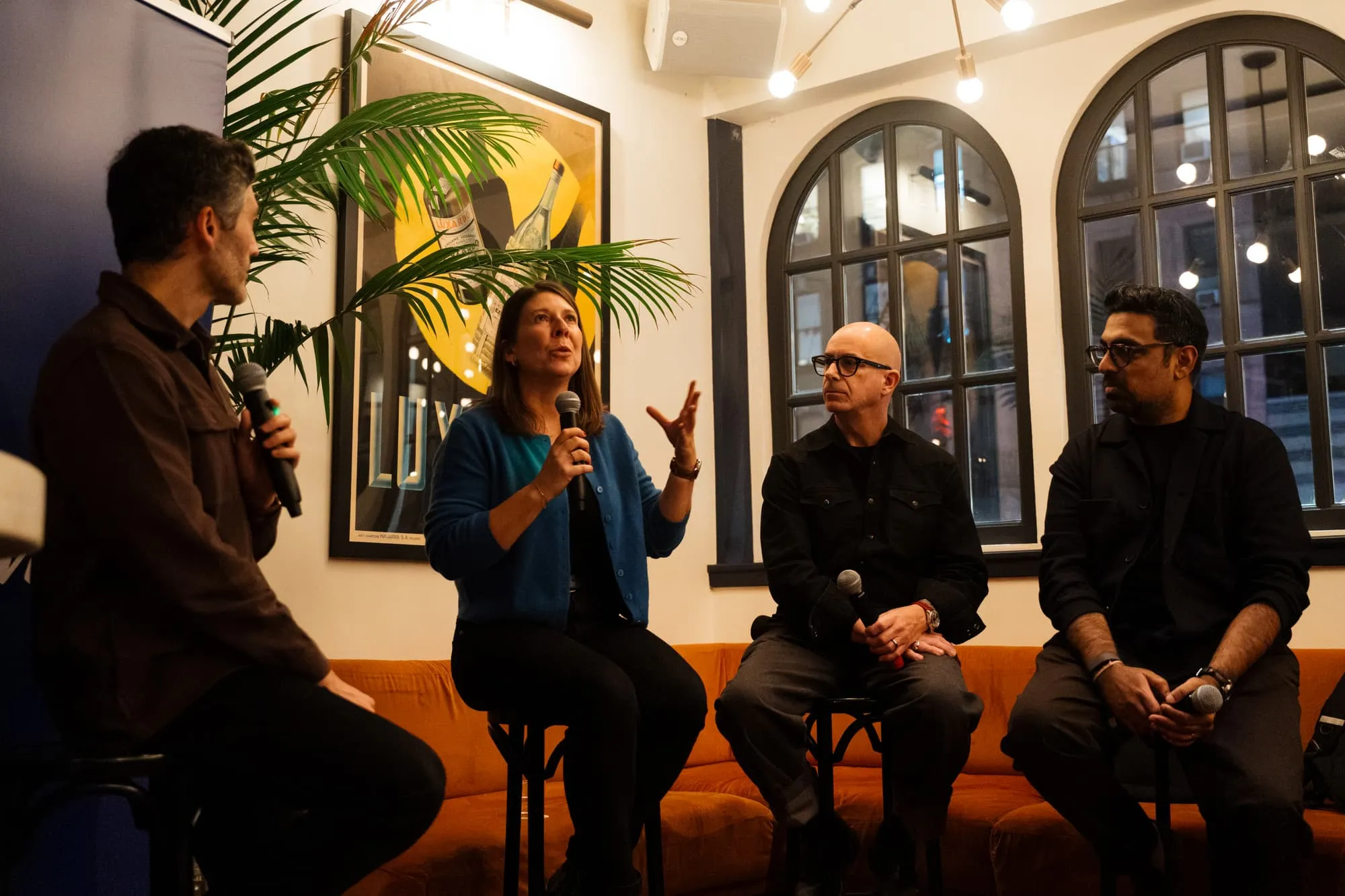
In New York, Kara Church, Head of UX Design at BlackRock, described how her team could build quickly, only to find that agreeing on the strategy and getting the right alignment took longer. The bottleneck had shifted from building to deciding what to build.
As Domingo put it in London: “You’re going to have all these agents doing things for you, but ultimately you need to know where you’re going.”
Give AI access to your thinking
Every product carries decisions about the people it serves, how it should behave, and what makes it feel like the brand behind it. Much of that knowledge lives in people’s heads and in conversations across teams. Design systems bring some of that thinking together: the shared elements, guidance and decisions teams use to build a product. An agent-ready design system makes that information accessible to AI agents, software that can carry out tasks for a team, as well as to people.
As Amelia Marriott, a design systems consultant working with Savills, explained: “Designers just know because they’re part of that conversation. But Claude doesn’t unless it’s written down.”
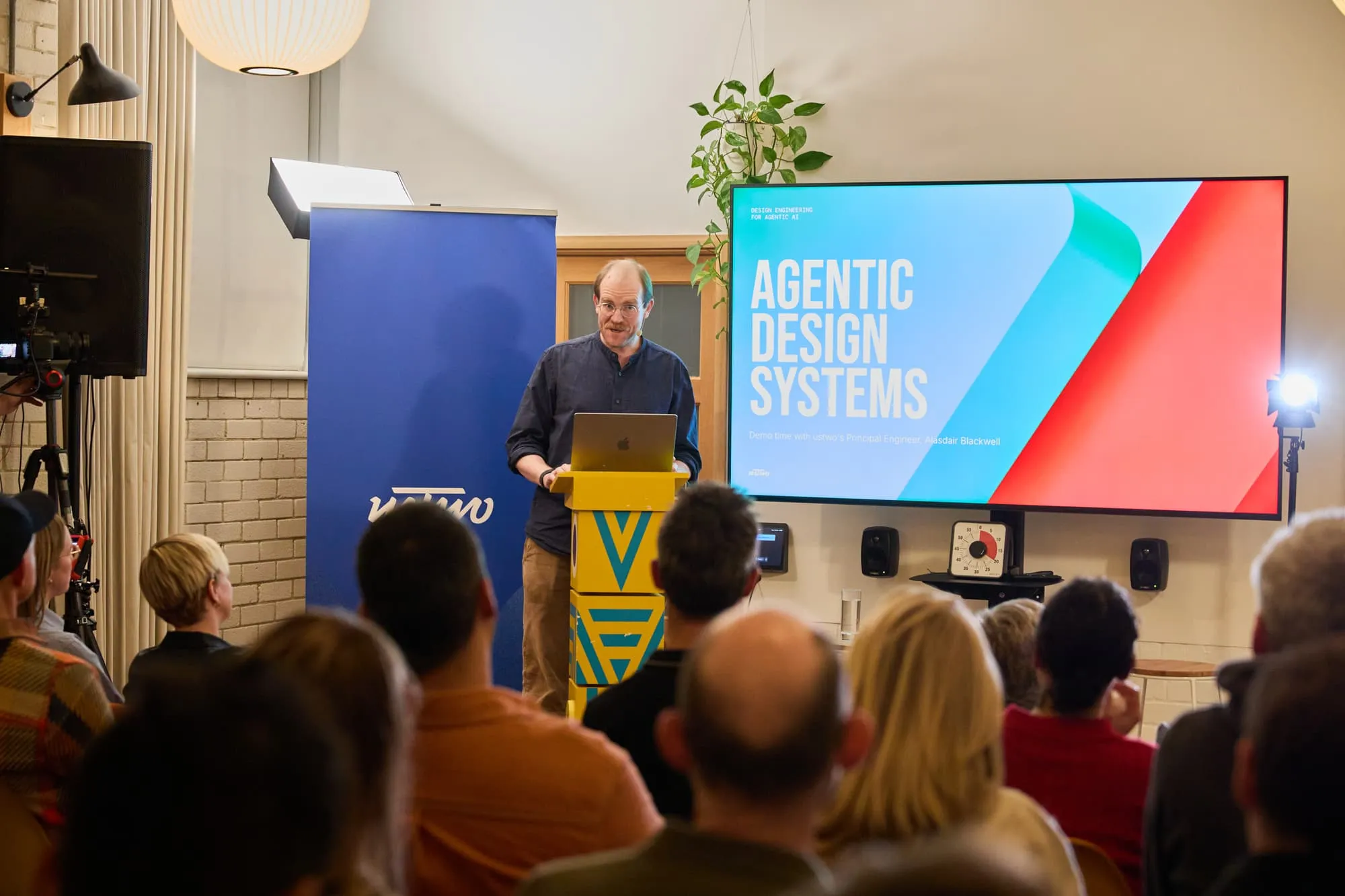
ustwo’s Executive Director of AI, Nayan Jain, described how designers added their expertise to a design system built in code. This helped engineers see the thinking and craft behind design decisions earlier in the process, while making that knowledge available to AI agents too. Contracts offer one way to make those decisions useful across a team. As ustwo’s Principal Engineer Alasdair Blackwell explained, a contract is a “shared understanding of how a component should behave”: when to use it, when not to, and how it needs to handle accessibility. Skills then give agents instructions for building and reviewing components using those contracts and the organisation’s standards. Alasdair put this to the test by asking Claude to build a pop-up component and scoring it against ustwo's code quality and correctness checks: 81% without contracts and skills, 96% without skills, 98% with them.
That shared guidance should leave room for creativity. As Kara put it, a design system needs “the flexibility for creativity to happen at multiple levels”. Teams can explore new ideas and respond to customers while carrying through the qualities that make a product distinctive.
Build trust into the way AI is used
The quality of what AI produces depends partly on what it has to work with. Outdated or inconsistent information can be repeated across a product at speed. Guidance shaped by people who understand the business gives teams a stronger starting point.
Amelia described the value of building trust in both the system and the people responsible for it. “So if we build that trust, the AI will inherit it,” she said.
That trust still needs to be earned in practice. Leaders need clarity about what information agents can access and share, how their work can be reviewed and when people need to approve a decision. It also means bringing the people who will use and champion the work into those decisions.
At Remitly, Kostas Penlidis described using agents to address 12,000 inconsistencies in the product’s visual theme. The changes then needed to be checked and evidenced across the teams responsible for them. The capacity to make changes at scale brought a need to review them at scale, too.
Measure what the speed delivers
Moving faster is a useful measure. So is knowing whether the work is any good. At Fin, Domingo said many of the measures are already familiar: how widely the design system is used and how quickly teams can get to work into production.
The team is also testing whether AI draws on the design system at the right time. “We also measure how good the answer is,” he said. That includes checking that the work uses the right elements and functions as expected.
Leaders can also track how much time teams spend revisiting decisions. For customers, the measures include whether people can complete what they came to do, whether they return and how accessible and consistent the experience is.
Speed was never the hard part
AI has moved the bottleneck from production to decision-making. The question is no longer how fast you can build, but whether the thinking behind your product is written down clearly enough for an agent to execute against. Your design system has always been that place, but it’s written for people who were in the room when the decision was made, and agents weren’t there. Teams that don’t bake their knowledge into the design system will ship things quickly, but the output will look and feel like everything else.
Getting started doesn’t have to mean rebuilding everything. Pick a component that matters to your customers, and write down how it should behave and when to use it. Then test whether AI follows those rules: the gaps are where you need better documentation.
Watch the full panel conversation
For the full conversation, watch the video below or head to YouTube.